


 14-Sep-2026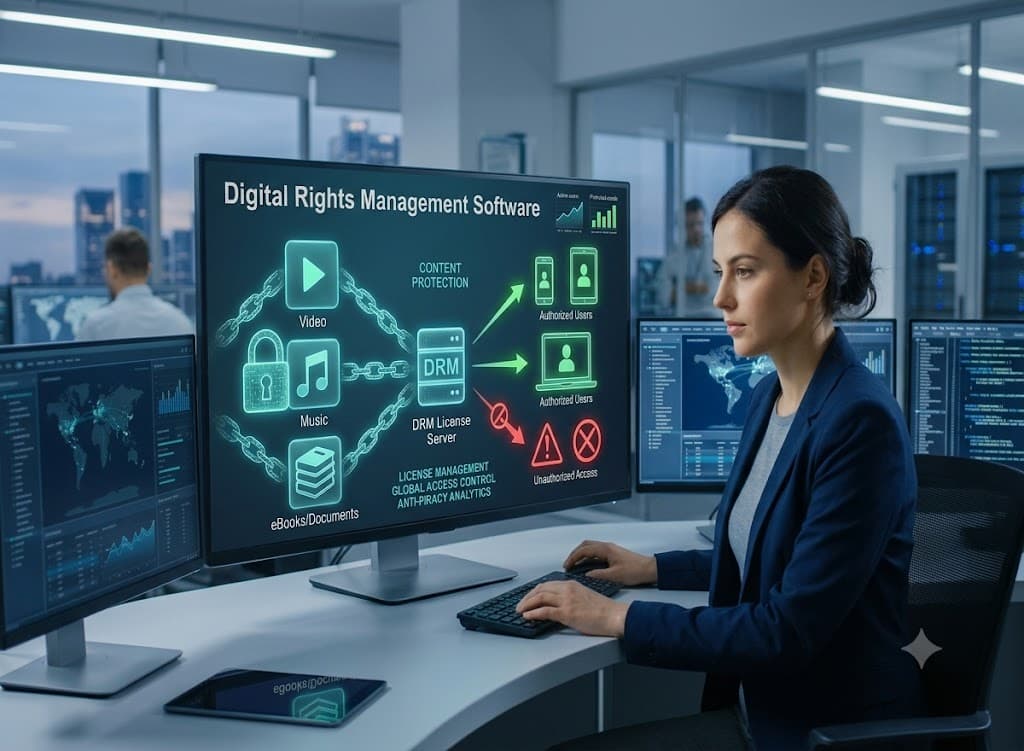
The digital video landscape is undergoing a massive architectural shift. As video streaming platforms expand across North America (USA) and the Middle East & North Africa (MENA/UAE), legacy Digital Rights Management (DRM) setups are breaking under the weight of high licensing costs, strict device fragmentation, and complex cross-border compliance.
Legacy single-DRM architectures or outdated vendor integrations frequently lead to high latency, licensing failures, and poor user experiences on modern smart TVs and mobile devices. Replacing your existing DRM architecture is no longer just a security update—it is a core business imperative for platforms scaling their subscriber base and protecting high-value premium content like live sports and Hollywood SVOD catalogs.
This definitive guide covers the technical architecture, business justification, step-by-step migration framework, and real-world considerations for executing a seamless OTT DRM replacement without service downtime.
What is OTT DRM Replacement?
OTT DRM replacement is the strategic process of migrating an Over-The-Top streaming platform’s existing digital rights management system—such as an aging single-vendor license server, custom legacy encryption module, or outdated key management framework—to a modern, unified Multi DRM orchestration architecture.
Modern DRM replacement typically involves transitioning from static, monolithic licensing to a dynamic ecosystem supporting Widevine Modular, Apple FairPlay Streaming, and Microsoft PlayReady, integrated with forensic watermarking and dynamic key distribution.
+-----------------------------------------------------------------------+
|                       Modern Multi-DRM Workflow                        |
+-----------------------------------------------------------------------+
|  [ Content Source ]  -->  [ Transcoder / Packager ]                   |
|                                    |                                  |
|                                    v                                  |
|                 [ SPEKE v2 / CPIX Dynamic Encryption ]                |
|                                    |                                  |
|           +------------------------+------------------------+         |
|           |                        |                        |         |
|           v                        v                        v         |
|   [ Widevine DRM ]        [ FairPlay DRM ]        [ PlayReady DRM ]   |
|   (Android/Chrome)          (iOS/Safari)           (Smart TVs/Edge) |
|           |                        |                        |         |
|           +------------------------+------------------------+         |
|                                    |                                  |
|                                    v                                  |
|                [ CDN & Unified License Gateway ]                      |
|                                    |                                  |
|                                    v                                  |
|                    [ Secure End-User Playback ]                       |
+-----------------------------------------------------------------------+
Why Legacy DRM Systems Fail Modern Enterprise Streaming
Early OTT solutions often relied on proprietary plugins, single-DRM setups, or basic AES-128 encryption. However, modern device ecosystems and studio licensing mandates have exposed severe flaws in these legacy setups.
- Device Incompatibility & Screen Blackouts: Apple devices require FairPlay (HLS), while Android and Chrome demand Widevine (DASH/CMAF). Smart TVs rely heavily on PlayReady. Legacy systems that fail to orchestrate all three formats seamlessly risk playback errors, black screens, or downgraded SD playback.
- Escalating Licensing Fees: Legacy vendors often charge extortionate per-license request fees, penalizing platforms as their active subscriber bases grow.
- Lack of Forensic Watermarking: Studio rights holders (such as Disney, Sony, or Warner Bros) and premium sports leagues now mandate session-based forensic watermarking for 4K/UHD and early-window movies. Legacy DRMs cannot insert dynamic user-tracing tokens into video segments.
- High License Request Latency: Outdated license servers located in centralized data centers cause significant license acquisition delays (sometimes 2–5 seconds) during peak live events, triggering user churn.
The Business Case: Cost Reduction vs. Revenue Protection
For platform owners evaluating their financial roadmap alongside an updated OTT Business Plan, swapping out an ineffective DRM vendor offers immediate, measurable ROI across three core areas:
1. License Fee Optimization
Modern cloud-native Multi-DRM vendors use edge-cached licensing proxies and token verification, reducing direct license generation requests by up to 60%. Instead of paying $0.005 per request to legacy vendors, enterprise platforms can scale cost-effectively with tiered pricing models.
2. High-Value Studio Compliance
Without compliance for MovieLabs’ Specifications for Enhanced Content Protection (ECP), platform operators cannot license premium 4K/HDR assets or offer high-tier SVOD/TVOD packages. Modernizing your Digital Rights Management Software unlocks premium tier pricing and higher ARPU (Average Revenue Per User).
3. Lower Churn from Playback Failures
License acquisition timeouts account for a significant portion of player startup failures. Moving to a low-latency, geo-distributed licensing gateway directly improves Quality of Experience (QoE) and subscriber retention.
Enterprise Architecture: Modern Multi-DRM Ecosystem
A complete ott drm replacement involves integrating several decoupled layers:
[ Video Source ]
       │
       ▼
[ Encoders / Transcoders ] ── (SPEKE v2 Protocol) ──► [ Key Management Service (KMS) ]
       │                                                          │
       ▼                                                          │
[ Dynamic Packager ] ◄────────────────────────────────────────────┘
 (CMAF / HLS / DASH)
       │
       ▼
[ CDN Edge Cache ]
       │
       ▼
[ Video Player Client ] ── (Auth Token) ──► [ License Gateway ] ──► [ Multi-DRM Engine ]
- Unified Ingest & Packaging Layer: Video chunks are encoded once using Common Media Application Format (CMAF) and dynamically packaged into HLS and DASH.
- Standardized Key Exchange (SPEKE v2 / CPIX): Secure Property Access and Key Exchange (SPEKE) protocols establish secure communication between video transcoders/packagers and the DRM Key Management System (KMS).
- Unified License Gateway: Evaluates JWT (JSON Web Tokens) issued by your backend authentication system, checking subscriber entitlements before requesting license keys from Widevine, FairPlay, or PlayReady backend servers.
- Client-Side SDK Integration: Modern video player SDKs (AVPlayer, ExoPlayer, Shaka Player, renderers for Tizen/WebOS) manage hardware-level decryption (Security Level L1 for Android, Hardware DRM for Smart TVs).
Step-by-Step OTT DRM Replacement Migration Plan
Replacing a live platform's DRM system requires a zero-downtime strategy to protect active streams and continuous playback sessions.
Crucial Rule: Never perform a hard cutover of license servers for live streams or active catalog assets without running parallel dual-key packaging for at least 72 hours.
Phase 1: Audit & Entitlement Decoupling
- Audit device distribution (iOS, Android, Web, Smart TVs, STBs).
- Decouple your user authentication layer from the legacy DRM vendor. Ensure your native Video Content Management Systems issue standard JWT tokens for content access validation.
Phase 2: Dual Encryption & SPEKE Integration
- Configure your packagers/transcoders to generate streams using dual-key sets or unified CPIX protocols supported by both legacy and new key management systems.
- Validate that new asset ingestion supports dynamic key rotation for live streams.
Phase 3: SDK & Player Layer Upgrade
- Deploy updated player applications with support for the new licensing gateway.
- Maintain fallback rules to legacy license acquisition endpoints for older, un-updated app versions.
Phase 4: Phased Traffic Routing & Cutover
- Shift license traffic dynamically at the API Gateway level (e.g., 10% -> 50% -> 100%).
- Monitor License Acquisition Success Rates (LASR), startup times, and error codes.
- Sunset legacy DRM license servers once active client sessions on old versions drop below threshold levels.
Legacy DRM vs. Modern Multi-DRM Architecture
| Architectural Dimension | Legacy Single DRM Setup | Modern Multi-DRM Architecture |
| Supported Formats | Single protocol (e.g., custom HLS AES or PlayReady only) | Unified CMAF (Widevine + FairPlay + PlayReady) |
| Key Exchange Protocol | Proprietary Vendor APIs | SPEKE v2 / CPIX Standard |
| Hardware Security | Software-based (Easy to compromise/scrape) | Hardware Root of Trust (Widevine L1, Apple Secure Enclave) |
| License Acquisition Speed | 1200ms - 3500ms (Centralized) | < 200ms (Edge-cached proxy token verification) |
| Watermarking Capabilities | Static or None | Session-based A/B Forensic Watermarking |
| Cost Scaling | Per-license fee penalties as audience grows | Bulk tiered licensing with local proxy caching |
Regional Comparison: USA vs. UAE Markets
Implementing content protection across different geographic markets requires catering to unique market dynamics, device ecosystems, and regulatory guidelines.
United States (USA) Market Factors
- Device Landscape: High concentration of Apple devices (iOS, Apple TV), Roku, Smart TVs (Samsung Tizen, LG WebOS), and games consoles.
- Mandates: High-density 4K/UHD and early-window SVOD catalogs strictly require Hardware DRM (Widevine L1, FairPlay) and MovieLabs ECP compliance.
- Key Concern: High risk of screen recording and stream ripping across desktop browsers.
UAE & MENA Market Factors
- Device Landscape: Heavy Android mobile dominance paired with rapid adoption of high-end Apple devices and connected Smart TVs in urban centers.
- Mandates: Strict regulatory standards around broadcast rights for live international sports (football, cricket).
- Key Concern: Regional pirated IPTV services redistributing live streams. Modern ott drm replacement strategies in the UAE must combine dynamic Multi-DRM with low-latency forensic watermarking to shut down illicit redistributors in real time.
Platforms targeting both regions must work with an experienced OTT platform development company to build cloud-agnostic security infrastructures tailored to these distinct environments.
Real-World Use Cases & Architectural Scenarios
Scenario A: Migrating a Live Sports Platform in the UAE
A major regional broadcaster in Dubai experienced license request timeouts during high-profile football matches due to sudden traffic spikes.
Solution: The engineering team replaced their legacy DRM setup with an edge-cached Multi-DRM license proxy combined with an updated Video CMS.
- Result: License acquisition latencies dropped from 2.4 seconds to under 180 milliseconds, preventing app crashes during peak events.
Scenario B: Enterprise SVOD Catalog Modernization in the USA
A US-based media company operating a broad catalog wanted to license studio 4K/UHD titles but lacked Widevine L1 and FairPlay hardware protection.
Solution: By carrying out an enterprise-grade protection overhaul using standard Digital Rights Management frameworks, they deployed a dynamic packager supporting CPIX and SPEKE v2.
- Result: Achieved 100% MovieLabs ECP compliance, allowing the platform to unlock higher-tier subscription pricing for 4K content.