12-Nov-2026
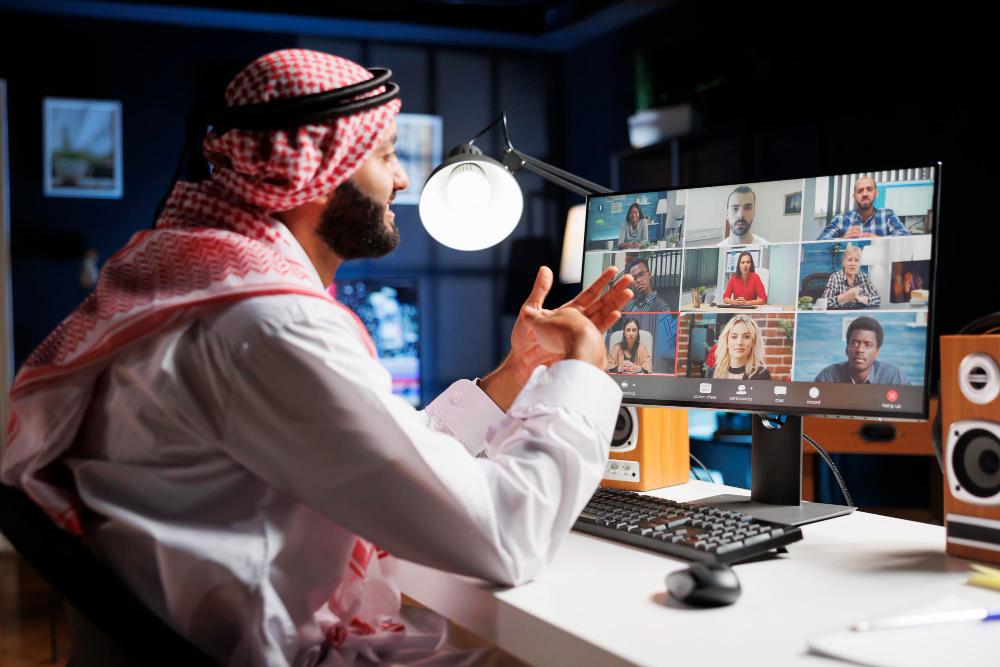
The digital broadcast ecosystem across the United Arab Emirates has entered an era of unprecedented concurrency and technical sophistication. Backed by nationwide standalone 5G coverage, fiber-to-the-home penetration exceeding 99%, and mobile adoption rates above 96%, audiences in Dubai, Abu Dhabi, and Sharjah have abandoned traditional satellite schedules in favor of real-time, mobile-first video delivery.
Engineering carrier-grade live video streaming UAE infrastructure is fundamentally different from hosting static on-demand video files. When hundreds of thousands of simultaneous viewers tune into a championship cricket match, a regional financial summit, or a breaking news broadcast within a ninety-second window, poorly architected origins collapse, CDN edges choke, and DRM licensing servers time out. Capturing the Gulf’s high-ARPU viewing demographic requires deterministic low latency, localized edge points of presence (PoPs), seamless telecom billing integrations, and studio-grade content security.
The UAE Streaming Ecosystem: 5G Infrastructure and Viewer Expectations
Operating a live digital broadcast network in the Emirates presents unique technical advantages alongside strict commercial realities:
- Mobile-First 5G Consumption: Unlike North American markets where living-room Connected TVs dominate evening watch time, over 70% of live event streaming in the UAE occurs on flagship iOS and Android smartphones over 5G cellular networks. Video players must adapt dynamically to rapid cellular handoffs while maintaining 1080p60 or 4K HDR fidelity.
- Zero Tolerance for Stream Delay: During live sports derbies or real-time financial announcements, a 30-second HLS latency buffer ruins the experience—viewers receive push notifications or social media alerts long before the goal or announcement appears on screen.
- Regional Cloud Availability: Routing live video traffic from a studio in Dubai Media City to an origin server in Frankfurt or Virginia and back to viewers in Abu Dhabi introduces unacceptable round-trip latency and inflates international transit costs. Production platforms deploy directly on local cloud infrastructure (such as AWS Middle East
me-central-1in the UAE) paired with domestic edge caching.
Partnering with an experienced OTT platform development company UAE ensures your streaming stack is engineered natively around Middle Eastern peering exchanges, local cloud regions, and regional telecom billing rails.
Core Engineering Pillars of High-Concurrency Live Streaming
Building a broadcast-grade live streaming platform requires synchronizing four distinct engineering layers:
- Resilient First-Mile Contribution: Transporting raw mezzanine feeds from stadium outside-broadcast (OB) vans or studio control rooms to the cloud over unreliable public internet using Secure Reliable Transport (SRT) or Zixi protocols with forward error correction (FEC).
- Real-Time Cloud Transcoding & Packaging: Splitting incoming high-bitrate feeds into multi-resolution adaptive bitrate (ABR) ladders and packaging them into unified Common Media Application Format (CMAF) chunks.
- Intelligent Multi-CDN Switching: Distributing traffic across multiple tier-1 Content Delivery Networks (such as Akamai, Cloudflare, and Fastly) with regional PoPs in Dubai and Fujairah to prevent single-provider congestion.
- Hardware-Backed Content Protection: Encrypting live video chunks on the fly using Digital Rights Management key servers capable of issuing hundreds of thousands of playback licenses per minute without latency spikes.
End-to-End Live Broadcast Architecture Blueprint
To illustrate how a resilient live broadcast flows from a production venue in the Emirates to millions of concurrent screens, review the following architectural pipeline:
Architectural Flow Description
- Stage 1 — Contribution & Ingest: Live cameras feed a local hardware encoder at the venue, transmitting dual redundant SRT streams (primary and backup) over bonded 5G/fiber connections into dual-region ingest gateways hosted in the AWS UAE (
me-central-1) cloud region. - Stage 2 — Cloud Processing & Playout: The ingest cluster routes feeds into GPU-accelerated transcoders generating H.264 and HEVC ABR ladders (1080p60, 720p, 480p, 360p). Simultaneously, SCTE-35 digital ad markers are injected via cloud master control, while a unified Video CMS manages stream metadata, electronic program guides (EPG), and geofencing policies.
- Stage 3 — Packaging & Security: Packagers segment the encoded streams into 2-second CMAF chunks with Low-Latency HLS (LL-HLS) and DASH manifests, encrypting segments via an edge-cached Multi DRM key exchange layer (Widevine L1, FairPlay, PlayReady).
- Stage 4 — Edge Stitching & Delivery: Server-Side Ad Insertion (SSAI) proxies splice personalized video commercials directly into user manifests before traffic hits a Multi-CDN routing engine, which selects the lowest-latency edge node in Dubai, Abu Dhabi, or Riyadh for each viewer.
- Stage 5 — Client Playback & Telemetry: Native mobile and Smart TV players decode the stream while streaming real-time Quality of Experience (QoE) telemetry back to an observability pipeline.
Latency Protocols Compared: WebRTC vs. LL-HLS vs. CMAF-DASH
Selecting the right streaming transport protocol dictates the trade-off between glass-to-glass latency, visual quality, and maximum audience scale:
| Streaming Protocol | Glass-to-Glass Latency | Maximum Audience Scalability | Adaptive Bitrate (ABR) Support | Primary Enterprise Use Case |
| Standard HLS / DASH | 15 – 45 Seconds | Massive (Millions of concurrent viewers) | Full multi-tier ABR ladder support | General entertainment, news channels, non-time-sensitive events |
| Low-Latency HLS (LL-HLS) & LL-DASH | 2.5 – 5 Seconds | High (Scales cleanly across standard CDNs) | Full ABR support via chunked transfer encoding | Live sports derbies, championship tournaments, award broadcasts |
| WebRTC (Real-Time) | Sub-500 Milliseconds | Moderate (Requires specialized SFU media servers) | Limited; adjusts dynamically via packet loss | Live auctions, interactive betting feeds, real-time town halls |
| SRT (Secure Reliable Transport) | 1 – 2 Seconds | Point-to-point contribution only | N/A (Mezzanine transport protocol) | First-mile video contribution from stadiums/studios to cloud |
For consumer-facing Live video streaming UAE deployments, LL-HLS paired with CMAF packaging represents the industry standard—delivering near-broadcast latency (under 4 seconds) while leveraging standard HTTP edge caching to scale effortlessly to hundreds of thousands of concurrent viewers.
Regional Monetization: Telco Billing, SSAI, and Hybrid Models
Monetizing live streams in the Gulf requires aligning payment infrastructure with regional consumer habits while maximizing ad yield during peak viewing windows:
1. Direct Carrier Billing (DCB) Integration
While credit card usage is high in major urban centers, a substantial portion of mobile viewers across the GCC prefer paying for sports day-passes or monthly subscriptions via their mobile operator balance. Integrating direct carrier billing APIs with e& (Etisalat) and du enables one-tap checkout via SMS OTP verification, boosting conversion rates for pay-per-view (TVOD) sporting events by up to 35%. Implementing flexible OTT Bundling Models further allows broadcasters to package live channels inside regional home fiber and mobile data plans.
2. Server-Side Ad Insertion (SSAI) for Live Breaks
Live sports and entertainment broadcasts feature scheduled commercial breaks triggered by SCTE-35 markers. Relying on client-side ad calls during a live match causes buffering freezes and exposes ads to ad-blockers.
By deploying programmatic SSAI through specialized OTT Monetization Services, targeted video advertisements are stitched directly into the live stream at the edge server. Viewers experience seamless commercial transitions identical to traditional satellite television, while broadcasters capture premium programmatic CPMs across both AVOD and hybrid tiers. Operators exploring What is AVOD? can see how ad-supported live channels drive rapid audience acquisition across the Emirates.
Enterprise Security, Anti-Piracy, and GCC Data Residency
Live sports rights and exclusive regional premieres are prime targets for illegal restreaming rings. Protecting commercial licensing agreements requires a multi-layered security architecture:
- Edge-Cached Multi-DRM: During live events, thousands of users join simultaneously. If every client queries a centralized DRM license server at kickoff, the server stalls. Enterprise platforms deploy edge-cached key rotation and hardware-backed Digital Rights Management Software (Widevine Level 1, Apple FairPlay, Microsoft PlayReady) to keep license acquisition times under 150 milliseconds.
- Dynamic Forensic Watermarking: Embedding invisible, user-specific session identifiers into live video frames enables anti-piracy teams to identify and terminate pirated IPTV restream sources within minutes of detection.
- Short-Lived Tokenized URLs & Geofencing: Playback manifests are signed with ephemeral HMAC tokens tied to the viewer's IP address and UAE/GCC geolocation boundaries, preventing unauthorized hotlinking across borders.
- Data Sovereignty Compliance: Hosting user databases, payment tokens, and viewing logs within local UAE cloud availability zones ensures full compliance with UAE Federal Decree-Law No. 45 on Personal Data Protection, keeping sensitive subscriber records within national borders. For legacy networks upgrading aging security stacks, executing an OTT DRM Replacement modernizes encryption without disrupting live operations.
Sector-Specific Use Cases: Sports, Broadcasters, and Public Sector
1. Regional Sports Leagues and Combat Sports
Combat sports, cricket tournaments, and football leagues across Dubai and Abu Dhabi rely on Live Streaming engines capable of handling extreme traffic spikes—often jumping from 5,000 idle users to 300,000+ concurrent streams minutes before a main event. Adding live polls, multi-camera angle switching, and real-time match statistics via native Interactivity modules keeps viewers engaged inside the app rather than drifting to second-screen social feeds.
2. Terrestrial Broadcasters Launching 24/7 Digital Channels
Established television networks across the Middle East deploy dedicated OTT Platform for Broadcasters architectures to simulcast linear channels online and spin up thematic FAST (Free Ad-Supported Streaming TV) channels. Using automated Cloud playout and Cloud Playout Solutions, broadcasters schedule 24/7 digital streams, insert localized Arabic/English graphics, and distribute feeds across web, mobile, and IPTV Streaming Software endpoints without investing in additional hardware control rooms.
3. Government Summits, Financial Forums, and Enterprise Town Halls
Major international conferences hosted in the UAE—from sustainability summits to sovereign wealth forums—require high-security, multi-language live broadcasting. Modern platforms deploy Enterprise Generative AI Development pipelines to generate real-time Arabic and English closed captions, automate session indexing, and clip keynote highlights immediately for global distribution. Organizations coordinate field broadcast crews and logistics using integrated Dispatch Software System workflows.
Implementation Roadmap for Gulf Media Networks
Launching a resilient live streaming ecosystem in the UAE follows a structured four-phase engineering lifecycle:
- Phase 1 — Architectural Discovery & Capacity Modeling: Define peak concurrency targets, latency budgets, and regional CDN peering strategy. Draft a comprehensive OTT Business Plan and engage technical advisors through OTT Consulting Services to align cloud egress budgets with projected subscriber ARPU.
- Phase 2 — Cloud Ingest, CMS & Playout Configuration: Provision redundant ingest endpoints in AWS UAE (
me-central-1), configure an enterprise video cms alongside core Video Content Management Systems, and integrate automated AI metadata tagging via an experienced ai development company. - Phase 3 — Native Client Engineering & Multi-DRM Integration: Build native iOS, Android, and Smart TV players using modular UI frameworks like Experience builder on top of the Vodistry core engine, integrating regional payment gateways and hardware-level Multi-DRM.
- Phase 4 — Chaos Testing, Load Simulation & Live Telemetry: Execute synthetic load tests simulating 250,000+ concurrent viewers hitting origin and DRM servers simultaneously. Monitor live stream health using video Analytics and localized Video OTT Analytics UAE dashboards to track Time-to-First-Frame (TTFF), buffer ratios, and regional ISP performance.
Expert Architectural Insights & Common Pitfalls
Expert Architectural Insight:
"The single biggest mistake broadcasters make when launching live streaming in the UAE is testing their infrastructure with steady, gradual traffic ramps. Live sports and breaking news do not ramp gradually—they behave like a 'thundering herd.' When 150,000 viewers tap a push notification at the exact same second, uncached token validation endpoints and non-pre-warmed CDN edges will choke. Always pre-warm CDN caches 30 minutes prior to broadcast and decouple user authentication from manifest delivery."
Pros and Cons of Cloud-Native Live Streaming Architectures
Pros:
- Elastic Concurrency Scaling: Instantly scales compute and edge delivery from zero to hundreds of thousands of viewers without maintaining idle on-premises hardware.
- Sub-4-Second Latency: LL-HLS and CMAF packaging eliminate traditional HLS broadcast delays.
- Automated Multi-Language Localization: AI-driven transcription and translation expand reach across Arabic, English, and South Asian diaspora demographics in the GCC.
Cons:
- Egress Bandwidth Costs: Unoptimized 4K/1080p bitrates during viral events can drive substantial monthly CDN bills without strict ABR ladder tuning.
- Complex Multi-Vendor Integration: Synchronizing contribution encoders, DRM servers, SSAI ad stitchers, and telco billing APIs requires deep systems integration expertise.
Three Critical Pitfalls to Avoid
- Relying on Single-CDN Delivery: Even tier-1 CDNs experience localized routing congestion across Gulf ISP peering points. Always implement real-time Multi-CDN switching.
- Ignoring Automated Content Repurposing: Live broadcasts hold immense post-event VOD value. Teams looking to Create Engaging Video Content should deploy AI clipping pipelines to automatically extract vertical social highlights while the live stream is still running.
- Operating Without Real-Time Video QoE Analytics: Standard web analytics cannot detect player-level buffering or DRM license failures. Deploying an OTT Platform with Advanced Analytics ensures engineering teams spot ISP-specific degradation before viewers churn.